

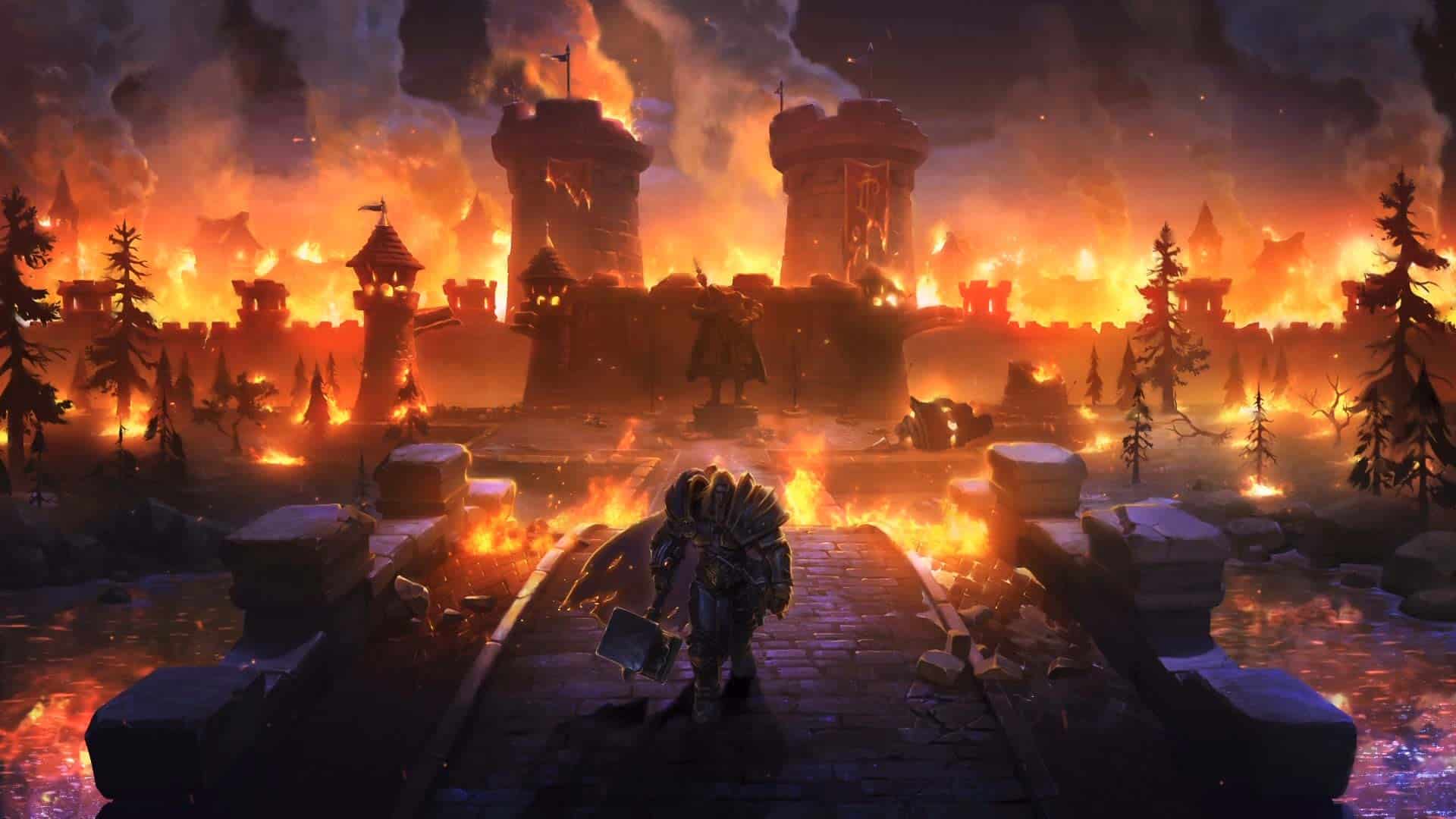
Before Stratholme was a ruined battleground split between the Scarlet Crusade and the Scourge, it was a living, breathing city — and its people died in a single night, purged by the order of the man who would become the Lich King. This is the story of how Arthas Menethil crossed a line he never came back from.
The Plague Nobody Saw Coming
The Third War hadn’t fully begun, not in any way most of Lordaeron’s citizens could have recognized yet. Grain shipments were moving through the kingdom, coming out of Andorhal, and nothing about them looked wrong. People baked bread. People ate it. And somewhere behind the scenes, a dreadlord named Mal’Ganis was watching it happen, because the grain was never just grain — it carried the Plague of Undeath, and everyone who consumed it was already dying, whether they knew it yet or not.
Kel’Thuzad — the necromancer who would go on to found the Cult of the Damned and later serve as Naxxramas’s own undead master — is the one who tipped Arthas off to what was actually happening. By the time this story reaches Stratholme, Kel’Thuzad had already thrown in with the Scourge. He wasn’t warning Arthas out of loyalty. He was watching a plan unfold.
The Order
Arthas Menethil arrived at Stratholme’s gates with Jaina Proudmoore and Uther the Lightbringer, backed by the Knights of the Silver Hand. They inspected the grain shipments themselves and confirmed what Arthas already feared: the infection wasn’t coming. It had already happened. Every person in that city who’d eaten the tainted bread was going to die and rise again as Scourge, whether it took hours or days.
Arthas reached a conclusion that still gets argued about on forums decades later: the entire city needed to be purged. Not quarantined. Not evacuated. Killed, before the infection could finish its work and hand the Scourge a fully formed undead army.
He gave the order to Uther. Uther refused.
Uther’s refusal wasn’t hesitation — it was a flat, principled no. These were still living people. Most showed no symptoms at all. Killing them on the certainty of what they’d become wasn’t defense, in Uther’s eyes. It was slaughtering innocents on a technicality. Arthas disbanded the Knights of the Silver Hand rather than back down, severing the alliance between his cause and the paladin order that had shaped him.
The Purge
Arthas did it himself. Alone, or with whatever forces still stood behind him, he burned Stratholme building by building, killing its people before the plague could finish what it started.
And then Mal’Ganis showed up to watch.
The dreadlord didn’t fight Arthas directly — he toured the city instead, openly collecting citizens who’d already turned, gloating that Lordaeron’s people belonged to the Scourge now regardless of what Arthas did. It turned the purge into a race, playing out street by street: Arthas killing the living before they could turn, Mal’Ganis claiming whoever he could reach first. Arthas didn’t slow down. He sped up.
By the time it was over, the city’s population was almost entirely gone. When Uther and Jaina finally arrived and saw what had actually happened, they were horrified — confirming, if there was ever any doubt, that this had been carried out without them, and against everything they’d tried to stop.
What Came After
Mal’Ganis got exactly what he wanted. He teleported away, daring Arthas to follow him to Northrend, and Arthas — now isolated from the mentor and the order that once defined him — vowed to hunt him to the ends of the earth. That vow is what actually sends him north, toward the frozen ruins where he’ll find a cursed runeblade waiting in the ice, and toward the ending everyone who’s played this far into Warcraft’s story already knows is coming.
Stratholme is where Arthas stopped being a prince trying to protect his people and started becoming something else. Everything that follows — Frostmourne, the death of his own father, the Lich King’s throne — traces back to a decision made in one burning city, against the advice of the one person who might have stopped it. It’s worth sitting with what actually makes this story land the way it does: nobody in it is simply evil. Uther is right to refuse. Arthas isn’t wrong that the city was doomed either way. The tragedy isn’t a villain making a villainous choice — it’s a good man making a monstrous one, for reasons that almost make sense, and never being able to take it back.
Related Guides
- Stratholme Guide (WoW Classic) — the ruined city itself, centuries after this event
- Stratholme Quests Guide (WoW Classic) — including quests tied to Aurius, a survivor of what happened her